Introduction
You’ll find the Yavateshwar temple in Yewateshwar village, within the Satara district, when visiting Maharashtra. Nestled in the Western Ghats, this temple is situated at an elevation of roughly 2500 feet. Coming from Pune, Mahabaleshwar, or Panchgani, you’ll have a good amount of visitors to the temple. Satara Town, a mere five kilometers away, is basically the perfect place to stay if you’re planning to spend a lot of time at the temple.
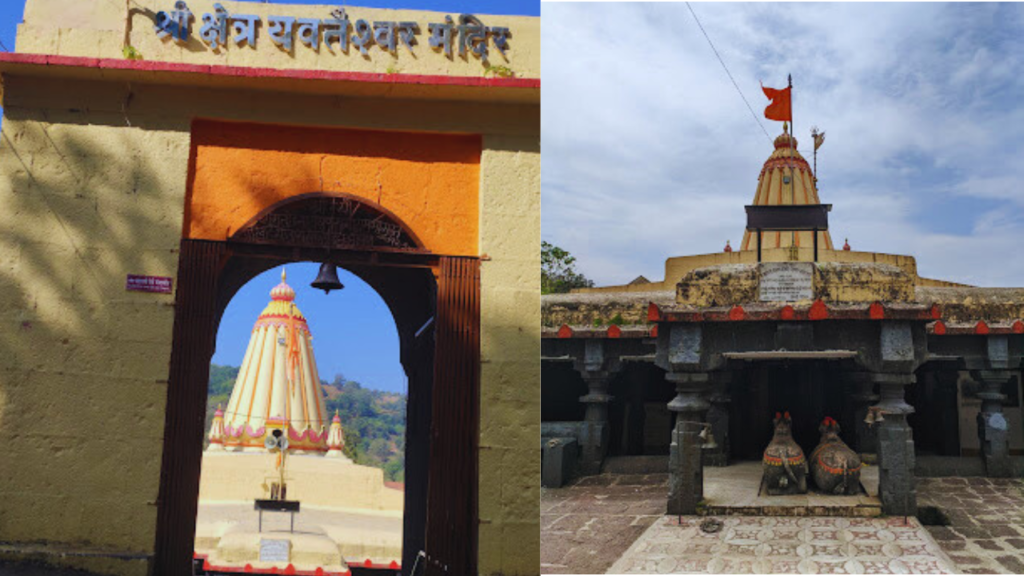
You’ll want to take the road from Satara to Kas Pathar, when heading to the Yavateshwar Temple. The Maharashtra government has deemed this temple a protected monument and the Archaeological Survey of India confirmed its official status.
Historical and present Significance
The Yadav Dynasty of Devagiri supposedly constructed the temple during the 13th century CE.
Coming from a rich history, the Yavateshwar Temple is an old, yet glorious monument..
Architecture: Looking at the temple in the Hemadpanthi style, you’ll see that it’s made up of several key parts, including the sanctum, antrala (vestibule), sabha mandapa (assembly hall), and mukha mandapa (front hall).
Lord Yavateshwar, At its heart is a Shiva Linga, which is the temple’s supreme deity, and happens to be a Swayambhu Moorthy, basically, it self-reveals its presence.
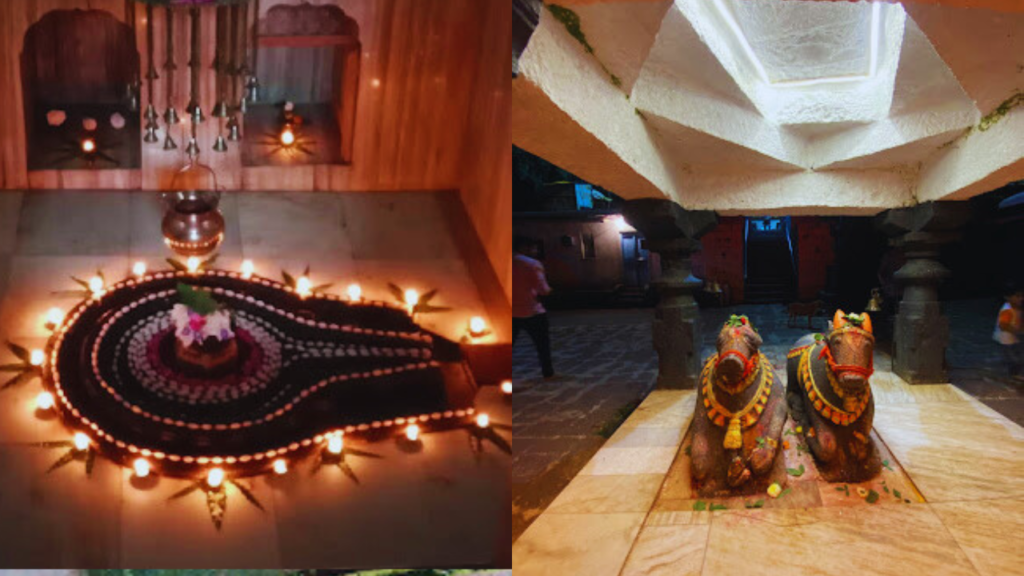
Nandi Mandapa: The temple’s two Nandi statues in the Nandi mandapa represent the bull and Lord Shiva’s mount, and since they’re facing the shrine, show their undying loyalty to Lord Shiva..
Other Deities: There are additional shrines in the complex for the goddess Parvati, Lord Ganesha and Kala Bhairavnath, all of which add to the spiritual and mystical ambiance of the temple.
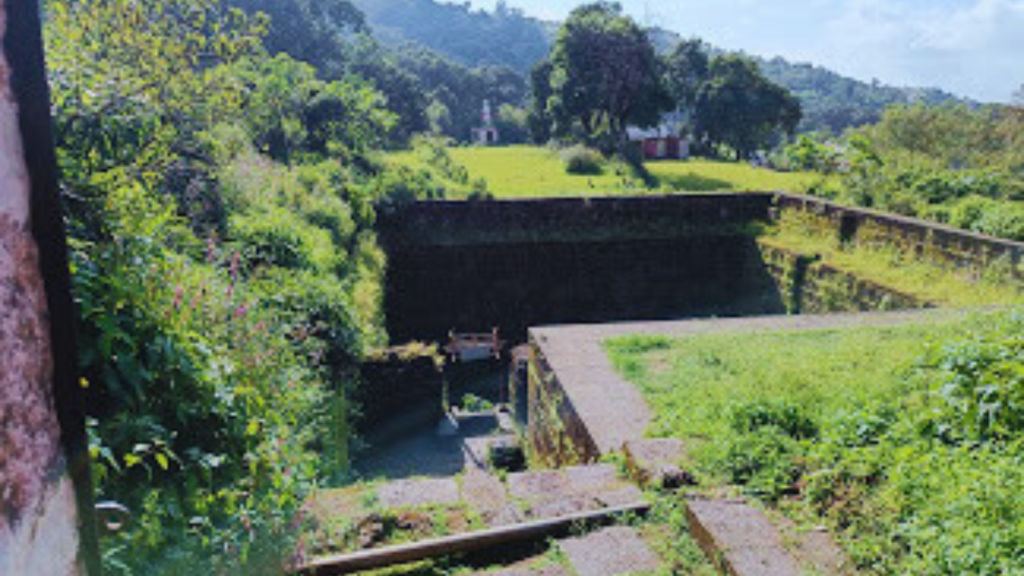
Kund (Water Tank):You’ll find a water tank, also known as a kund, which is approached by a flight of stairs and is used in the cleaning and ceremonial processes, when behind the temple.
Coming from the main temple, you’ll also notice the Kalbhairavnath temple, with its Dravidian-styled Kalbhairava idol and its mind-bogglingly impressive peak interior. These two temples, both fortified by sturdy stone walls, were built in the 16th century.
In front of the temple, there’s an enormous lamp and there are lots of other statues and idols within the temple grounds. On the western side of the temple, there’s the drinking water tank, the Devatala, constructed out of Jambha stone, which, unfortunately, has been emptied of its original water level.
You’ll find the Pedhyacha Bhairoba temple, a shrine dedicated to Bhairoba, a belief of this region, when heading north on the hill. Coming from the top of the hill, it’s said that Chhatrapati Shahu Maharaj constructed the Yavateshwar temple for Lord Mahadev. Panoramic views of Kanher Dam, Sajjangarh, Jarandeshwar and Merulinga can be had from this point.
As a marker of the area’s architectural and cultural heritage, the Yavateshwar temple is an absolute must-see. The area is covered in a luscious expanse of thick bushes and creates a wonderful soothing environment. From the hill, the city of Satara unfolds, offering a breathtaking view of the front side of the fort, Ajinkyachtara and you can easily get to Satara town via half-hourly ST or private transport.
This place has a reputation as a holy pilgrimage site for both Lord Shiva worshippers and tourists, who are in awe of its serene aura and stunning scenery.
The Festivals Celebrated at Yavateshwar Temple
The villagers from Yavateshwar, Sambarwadi, and Ambedare join forces for the annual pilgrimage to the temple, when the eighth day of the Hindu month of Ashwin arrives.
The festive atmosphere is enhanced with rhythmic beats of drums and clappers, as the grand Palakhi procession takes its place in the journey, heading towards the mango tree that has found a unique significance in the yatra. This is a tree that, according to the temple rituals, blooms on the day of the pilgrimage and brings forth its fruits only after, therefore the uniqueness of the temple is such is basically guaranteed by the annual timing of the tree’s blossoming.
In one of its rituals, a devotee of the village god goes up the tree, cuts off a branch that has delicate flowers and brings it back down to put into the Palakhi. And with the devotee riding on its shoulders, the Palakhi then goes off towards the temple. It’s considered that the yatra is over when the mango tree starts to flower and produces fruit. In the month of Shravan, people come in droves to this temple to pray for Lord Mahadev’s blessings.
Exploring the Serenity and Tranquillity of Yawateshwari Mandir
As you are at Yavateshwar you’re completely surrounded by cold weather. Coming from here, you’ll see the Jarandeshwar, Ajinkya Tara, and Merulinga hills, and if you go straight ahead, about 13 to 15 kilometers will take you to the breathtaking Kaas plateau, which is none other than the renowned Kas Pathar.
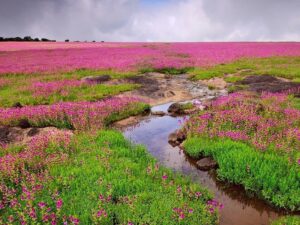
Well-known as a treasure trove of happiness, the road from Yavateshwar to Kas Pathar is filled with a kaleidoscope of butterflies, trees sipping up the rainwater, brand-new shrubs and the wonderful feeling of the air. The ghat districts of Pune, Satara, Sangli and Kolhapur are always like this during the monsoon season.
Many birds such as the Bhardwaj, Cuckoo, Bulbul, Khandya, Bandya, Kotwal, Robin, Dayal are supporting them with a multitude of sparrows and crows, and the general atmosphere here is heavenly. This region is basically the place of worship of Mahadev, a temple so famous in the state that lots of people come to pray.
Nearest Bus Station
As coming to Yevteshwar temple you can expect a ST or private car to drop you off every 30 minutes from Satara. You can also hop on a bus from the Satara bus stand, ask for the one going towards the Yevteshwar temple and it will take you straight there. There is a regular ST service here that runs every half an hour.
Nearest Railway Station
Coming by train, you can catch the Koyna Express from CST in Mumbai and get off at Satara Railway Station, which is basically the closest station. From there, a bus at the Satara bus stand will be a cinch to find.
Nearest Airport
Coming from Pune Airport, which is 140km away, you can take a bus or a taxi..
In which district is the Yavateshwar Temple located?
The temple is located in Yewateshwar village in Satara district of Maharashtra.
How far is Yavateshwar Temple from Satara?
The temple is located in Yewateshwar village in Satara district of Maharashtra. Satara Town is 5 km away
Who built the Yevteshwar temple?
The Yadav Dynasty of Devagiri is said to have built the Yavateshwar Temple during the 13th century CE. It is an old temple with a lengthy past.
What is the Speciality of Yavateshwar Temple?
Interestingly, the temple has two statues of Nandi in the Nandi mandapa, representing the deity bull and Lord Shiva’s mount.
For what is the Yavateshwar Temple famous?
The real feature of this god’s mango tree is that on this pilgrimage day, the tree blossoms in one day, and after being worshipped, mangoes are produced.